MLC Dharmendra Bhardwaj gives Viksit Bharat 2047 Its First Local Scorecard from Meerut
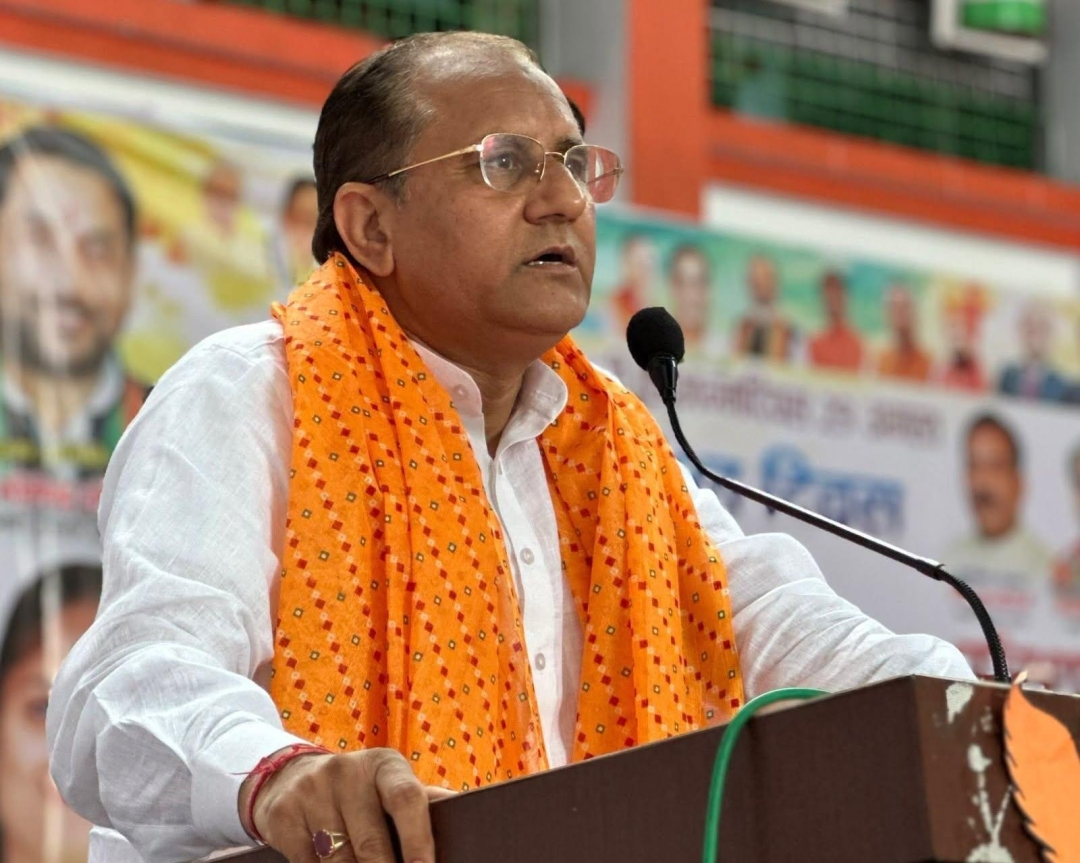
MEERUT, UTTAR PRADESH — Sunday 20,September 2026 — Twenty-six days after unveiling the 100-point Viksit Meerut 2027 charter on 17 August 2026, MLC Dharmendra Kumar Bhardwaj, Member of the Uttar Pradesh Legislative Council from the Meerut-Ghaziabad Local Authorities constituency, today publishes the campaign’s first 30-day rapid audit scorecard — an honest theme-by-theme accounting of what has been achieved, what is in progress and where gaps have been disclosed. The audit is the first instalment of a quarterly transparency commitment: the first formal Quarterly Progress Report falls due on 30 November 2026, the second and final one on 28 February 2027.
“The weakest thing in politics is a promise; the strongest is an accounting. Today we render an account — on every point, every pledge, every miss,” said MLC Dharmendra Kumar Bhardwaj.
Why the 30-day mark matters. The charter was launched on Monday 17 August 2026 as a three-announcement bundle: the 100-point charter itself, the Western UP Sports Industry Council (convened 27 August 2026 at the Mahaveer campus), and the 342-booth Jan Sampark Abhiyan citizen-outreach drive (launched 22 August 2026 at the Mahaveer Educational Park). The 30-day window that closes today is the first measurable interval against which public commitments can be tested. Today’s release converts the August anchor from a single-day news event into a documented, auditable, seven-month serial narrative — the explicit strategic posture of the campaign.
The audit method. Each of the 100 charter points — distributed across 10 themes of 10 points each — is assessed against three criteria: achieved, meaning a concrete deliverable has landed with a named partner on record and documented evidence; in progress, meaning the institutional vehicle is established, a partner is identified and a timeline is committed; and gap identified, meaning no progress yet, openly disclosed, with an owner assigned to close it. The audit is conducted internally, with an open invitation to ward-level citizen auditors and independent Meerut journalists to verify any line item. The full point-by-point ledger will be published in the first Quarterly Progress Report of 30 November 2026. The criteria are deliberately strict. A theme is not marked achieved on announcement — only on a landed deliverable with a partner whose name is on record and evidence that can be inspected; an intention with a date is in progress, not achieved; and silence is not an option — where nothing has moved, the audit says so and names the owner.
Sports Industry Capital 2030 — achieved. The Western UP Sports Industry Council was convened on 27 August 2026 with the Sports Goods Export Promotion Council (chairperson Sumnesh Agarwal), Sanspareils Greenlands (established 1931), BD Mahajan & Sons (1925, Sialkot), Sareen Sports Industries (1969), Bhalla International and the MSME Tool Room and Development Centre, Meerut (1986) — with its secretariat at the A-6 Sports Complex, Delhi Road, Meerut. The Sports Charter 2030 white paper is on track for 30 October 2026, and the DGFT petition on English-willow import duty rationalisation has been drafted.
Education and skilling — in progress. The CCS University (NAAC A++, established 1965) 100-acre extension-campus proposal was already passed in August 2025. The Teacher Training Institute concept paper is in joint drafting with Motherhood University, Roorkee, and Mahaveer University, Meerut (UP Act 8 of 2023). The Sanskrit Pathshala launch was announced on 8 September 2026, and the PM Kaushal Kendra baseline — 464 youth trained per lakh population at a 95 per cent certification rate — is confirmed, with the Atal Tinkering Labs scale-up from 85 to 200 schools in design phase. The Teacher Training Institute concept paper contemplates a joint institution that would give the district a dedicated pipeline of trained educators — the workforce constraint behind nearly every other education commitment in the charter.
Water, sewerage and civic infrastructure — gap identified. The 24×7 water-supply pilot ward (Ward 36, Brahmpuri) has been identified but not yet operationalised. The National Mission for Clean Ganga sewerage tracker (₹681.78 crore of projects) and the AMRUT 2.0 tracker (₹620 crore) have been designed but not yet published. The gap owner is the MLC’s coordination cell, working with the Meerut Development Authority (Vice-Chairman Sanjay Kumar Meena, IAS, in charge since 21 April 2025) and the Meerut Municipal Corporation (Municipal Commissioner Saurabh Gangwar, IAS, and Mayor Harikant Ahluwalia).
Housing and urban rejuvenation — in progress. The PMAY-Urban demand backlog of approximately 14,800 houses has been mapped ward by ward. The slum-cluster rehabilitation survey — covering Shahranpur Gate, Lisari Gate, Phaphunda, Malyana and Brahmapuri, collectively about 38,400 households per Census 2011 — has been commissioned, with the first ward-level report due 30 October 2026. The ward-by-ward PMAY-U mapping exists because a district-level backlog number, however accurate, tells no ward where to act; the slum survey, for the same reason, records settlement by settlement rather than as an aggregate.
Youth, jobs and entrepreneurship — in progress. The MUDRA-Shishu, PMEGP and CGTMSE outreach calendar has been drafted for the 9,878 registered sports-goods units and the wider 1,58,561-MSME base. The IT Park Partapur proposal of the UP Electronics and IT Department — 50 acres, stalled in a land-acquisition dispute — is under mediation support. The first Rozgar Mela is scheduled for the Sports Charter week of late October.
Women’s empowerment and safety — in progress. Coordination has been initiated on the 33 per cent women-candidate commitment for 2027. The PMAY-U women-ownership target of 75 per cent has been set; the Sakhi One-Stop Centre capacity expansion at the District Hospital has been proposed; and the 12,400 Self-Help Group baseline is confirmed, with the scale-to-20,000 roadmap in drafting. The Self-Help Group roadmap carries particular weight because a women’s collective is simultaneously a livelihood vehicle, a safety network and the most reliable last-mile channel the charter has for every other women-facing commitment.
Agriculture and the rural hinterland — gap identified. The sugarcane-dues real-time public tracker for the five operational mills — Daurala (DCM Shriram, ₹87.99 crore paid in December 2025), Mawana (₹75.83 crore), Nanglamal (₹36.10 crore) and two others — has been designed but is not yet live. The PM-Kisan flow audit and the Kisan Credit Card saturation mapping are pending. The gap owner is the MLC’s coordination cell with the District Industries Centre and the UP Sugarcane Department.
Communal harmony and heritage — in progress. The Nauchandi Mela internationalisation concept paper has been drafted. The Surajkund shared sacred precinct conservation proposal — covering the Chandi Devi Temple, the Bale Mian Dargah (1194 CE), the Shahpir Dargah (1620 CE) and the 1857 Mutineers’ Mosque — has been submitted to the ASI Lucknow Circle. The Augharnath (Kali Paltan) Temple 1857-memorial development proposal is in drafting with the Cantonment Board, and the Sabka Saath vocabulary has been institutionalised across all official communications.
Governance, transparency and civic services — achieved. The public MLC Local Area Development Fund tracker has been published on the campaign’s transparency portal, with quarterly disclosure of every rupee. The RTI-clinic-in-every-mandal calendar has launched; this 30-day audit is itself point 84 of the charter; and the grievance-redressal service standard — a 7-day acknowledgement and a 30-day resolution commitment — stands published.
Connectivity and sustainable mobility — in progress. The Delhi-Meerut RRTS (Namo Bharat, operational since February 2026) last-mile integration audit has been commissioned with the Meerut Metro. The NH-58 six-laning completion audit has been formally requested from the National Highways Authority of India; the Ganga Expressway Meerut-spur acceleration memorandum has been drafted; and the EV charging network along NH-58 and NH-119 is in design. The EV network design follows the freight corridors deliberately — the routes where commercial fleets can electrify first, and where charging infrastructure doubles as a public amenity for the towns it passes.
The aggregate. Two themes stand achieved — sports industry and governance. Six themes stand in progress — education, housing, youth and jobs, women’s empowerment, heritage, and connectivity — with residual points of the sports theme continuing alongside them. Two themes stand as disclosed gaps — water and sewerage, and agriculture — each with a named owner and a committed close date. The scorecard reports the mix as it is, not as a wish list would have it.
The Sports Council’s 16-day operational report. The Western UP Sports Industry Council, convened 27 August 2026, is operational. In 16 days it has established its secretariat at the A-6 Sports Complex; constituted four working groups — English-willow duty rationalisation with the DGFT, the Sports Goods SEZ Partapur pre-feasibility study with UP Invest, a design-IP protection cell with the DPIIT Controller General of Patents, and a buyer-delegation programme covering the USA, UK, Australia, Germany, France, South Africa and New Zealand; and begun drafting the Meerut Sports Charter 2030 white paper, targeted for 30 October 2026. The buyer-delegation programme’s country list is drawn from the cluster’s existing export map — the markets where Meerut’s manufacturers already sell and where a coordinated delegation can convert presence into orders. The white paper, due 30 October, will carry the full baseline-to-2030 accounting. The roadmap commits the cluster to grow from ₹1,500–1,750 crore of annual turnover to ₹3,500 crore by 2030, on the existing baseline of 40–45 per cent of India’s sports-goods exports, 3.15 lakh workers, 9,878 registered units and exports to more than 100 countries. Worker upskilling for the full 3.15 lakh is being routed through PMKVY and PM Vishwakarma, with class-neutral inclusion of Hindu Jatav leather workers and Muslim Ansari weavers in the same programme.
The Jan Sampark Abhiyan’s 21-day operational report. The 342-booth outreach drive, launched 22 August 2026, has in 21 days mapped 50 of 342 booths — 14.6 per cent coverage — and deployed the first wave of booth coordinators across its five-cluster coverage framework, backed by a three-tier WhatsApp cascade that complements the ward-level groups already active in the city. The drive’s electoral-roll rehabilitation sub-track has begun documentation camps with the Electoral Registration Officer in the Begumpul, Shastri Nagar and Lisari Gate pockets, where the 2025–26 Special Intensive Revision deletions were disproportionate — the constituency’s net deletion was 61,728 voters, from a pre-revision 3,16,966 to a post-revision 2,55,238. The documentation camps serve voters who discovered their deletion only at the roll’s publication. The camps walk affected residents through the re-verification forms, the evidence requirements and the objection process — turning a bureaucratic shock into a guided procedure. The target of 342-of-342 booth coverage stands for 30 September 2026.
The seven-month arc. The milestones ahead: full booth coverage by 30 September 2026; the Meerut Sports Charter 2030 white paper on 30 October 2026; the first Quarterly Progress Report with the full 100-point ledger on 30 November 2026; the second and final pre-polling audit on 28 February 2027; and the expected Uttar Pradesh Assembly polling of February–March 2027.
The transparency disciplines. Four commitments run through the arc. First, quarterly progress reports publish the full 100-point ledger with achieved, in-progress and gap status. Second, the public MLC fund tracker discloses every rupee of Local Area Development Fund expenditure quarterly. Third, the audit is open — ward-level citizen auditors and independent journalists may verify any line item, with documentation provided on request. Fourth, gaps are disclosed honestly, with owners assigned: the two theme-level gaps disclosed today both carry named owners and committed close dates. The open-audit invitation is the discipline that disciplines the others: any citizen or journalist may ask for the documentation behind any line in this release, and the campaign has committed to providing it. A scorecard that cannot survive inspection is public relations; this one is built to survive it. This posture is itself point 84 of the charter. Transparency is not a talking point; it is a deliverable.
“Thirty days ago we pledged 100 points. Today we render account. Two themes delivered, seven in progress, two delayed — we do not hide delay, we acknowledge it. This is accountability; this is development,” said MLC Dharmendra Kumar Bhardwaj.
About Dharmendra Kumar Bhardwaj:
Dharmendra Kumar Bhardwaj is a sitting Member of the Uttar Pradesh Legislative Council from the Meerut-Ghaziabad Local Authorities constituency — elected on 12 April 2022 with 89.61 per cent of the votes polled. He began his career as a chemistry teacher in 1992 and holds an M.Sc. from N.A.S. College, CCS University Meerut (1997) and a B.Ed. from Machra Degree College (1998). He is Chancellor of Motherhood University, Roorkee (since 2019); Chairperson of the Mahaveer Ayurvedic Medical College & Hospital, Meerut; Member of the Board of Management of Sardar Vallabh Bhai Patel University of Agriculture & Technology (SVPUAT), Meerut; and a working-council member of CCS University Meerut (NAAC A++, established 1965), where his 100-acre extension-campus proposal was passed in August 2025. His late father, Mahaveer Bhardwaj, was elected to the Meerut Zila Panchayat from Ward-12 (Sarurpur) in 2010 with 10,451 votes — the third-largest such victory in Uttar Pradesh that year. His term in the Legislative Council runs to 11 April 2028.
Media Contact
Company Name: CryptoMize
Contact Person: Dr. Jyoti Kush
Email: Send Email
Country: India
Website: https://cryptomize.com


